MIDI collection
Gospel MIDI Bank
Explore the language of contemporary Gospel piano.
The harmonic movement, voicings, passing chords and rhythmic ideas that define modern Gospel keyboard playing — as MIDI you can open, slow down, study and build on.
Premium
Coming soon
This release isn't open yet. Join the list and you'll hear first.
All purchases are handled and delivered by Gumroad.
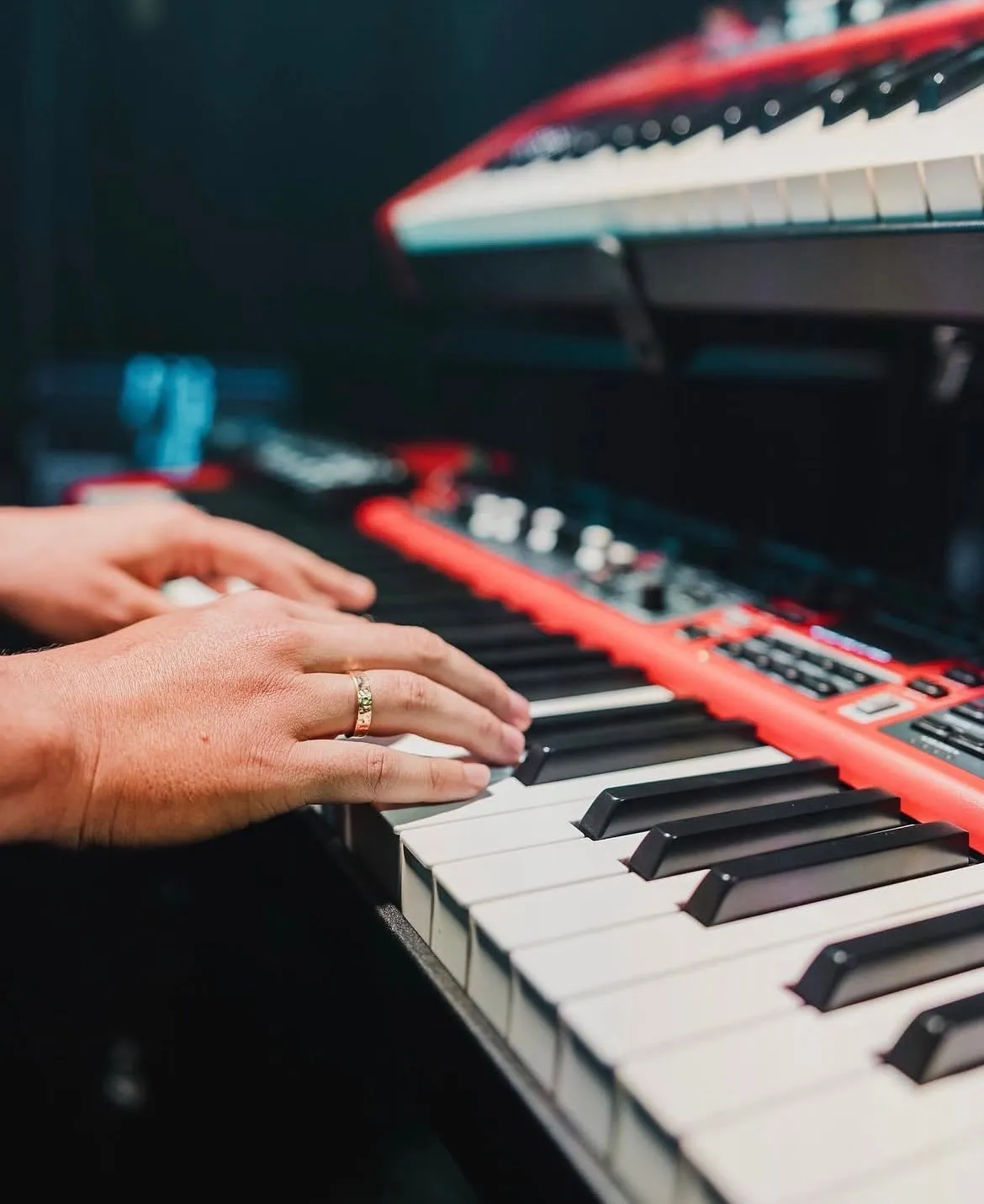
Contemporary Gospel piano is hard to learn from recordings. The parts that matter go by too fast to hear and faster still to transcribe: the passing chord that lasts an eighth note, the inner voice that moves while the top stays put, the reharmonization that turns an ordinary cadence into something that lifts a room.
This collection is that vocabulary written down. Every file is a playable performance — open it in any DAW, slow it to half speed, and watch the harmony move note by note. Study it, keep what's useful, adapt it to your own hands. Or drop it straight into a production.
It comes out of years of playing Gospel professionally, week after week, in front of full rooms. These aren't exercises invented for a product. They're the ideas I actually reach for.
What you'll get
- See contemporary Gospel voicings written out, note by note
- Slow any passage to half speed without changing the pitch
- Follow the passing chords and reharmonizations that are too quick to catch by ear
- Study the harmonic movement — where a line resolves, and why it works
- Adapt the vocabulary to your own playing instead of copying a lick
- Use it directly in a production, or purely as a study tool
What's included
- TBD: number of MIDI files, keys covered, tempo range, and the concepts included
Who it's for
- Gospel and worship keyboardists building a deeper harmonic vocabulary
- Pianists who can play the changes but want the movement between them
- Producers who need authentic contemporary Gospel piano in a track
- Players studying how the modern Gospel keyboard sound is actually built
Questions
- What musical world does this draw from?
- The contemporary Gospel keyboard scene — the harmonic language you hear from players such as Cory Henry, Braxton Moore, Mike Bereal, Jeremy Jeffers, Jayden Arnold, Joshua Domfeh, Quennel Gaskins, Dominique Brice, Eddie Brown and Kevin Powell, among many others. To be clear: these are reference points for the style, not collaborators. The collection is my own playing, shaped by the same tradition they work in.
- What's actually in the playing?
- Extended and quartal voicings, chromatic and diminished passing chords, reharmonization over familiar changes, inner-voice movement, walk-ups and walk-downs, turnarounds, modulations, and the rhythmic placement that makes Gospel comping sit where it does.
- Do I need to read music?
- No. MIDI shows you the notes on a piano roll — you can see the shape of a voicing and how it moves without reading a score. If you do read, most software will render it as notation.
- What software do I need?
- Any DAW or notation software that opens standard MIDI files — Logic, Ableton, Pro Tools, Studio One, MuseScore, and so on.
- Will it work with my piano sound?
- Yes. MIDI carries the performance, not the sound, so you can play it back through any instrument you like.
- Is this for learning or for producing?
- Both. Take the files apart to learn the vocabulary, or use them directly in a production.
- What's included exactly?
- TBD: exact contents.
Gospel MIDI Bank
Explore the language of contemporary Gospel piano.